

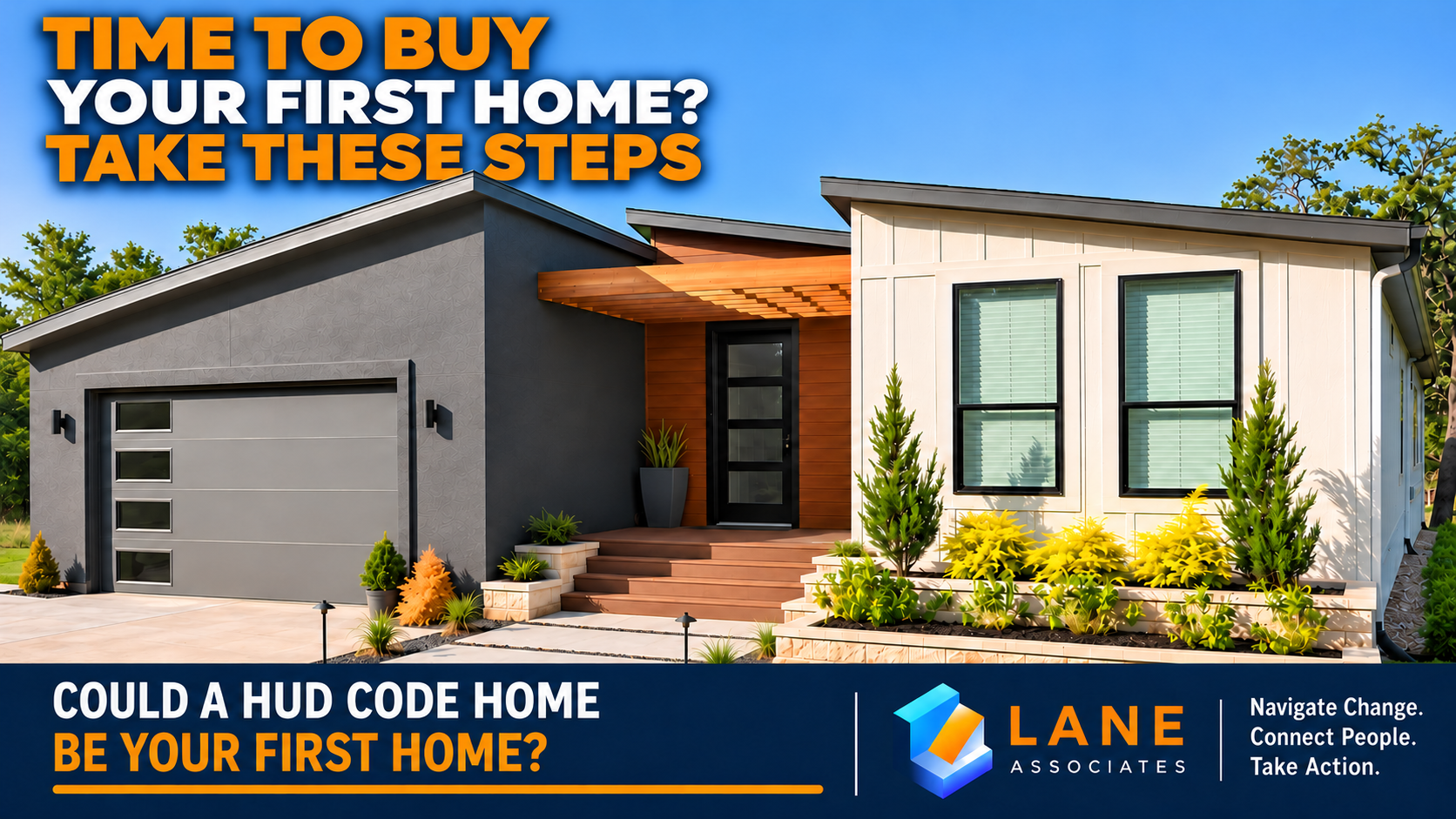
If you're trying to buy your first home, you already know the math is hard. Prices are up. Rates are up. And the supply of homes that fit a first-time buyer's budget has never been tighter. But there's a path that millions of Americans have taken — and that far too few first-time buyers even consider. It's called a HUD Code home. And it may be the most attainable route to homeownership available to you right now.
What Is a HUD Code Home?
A HUD Code home is a factory-built home constructed to a national building standard set by the U.S. Department of Housing and Urban Development. That standard — the HUD Manufactured Home Construction and Safety Standards — governs everything from structural integrity and energy efficiency to plumbing, electrical systems, and fire safety.
These are not the trailers of decades past. Today's HUD Code homes are built in climate-controlled factories by skilled tradespeople, using the same materials found in site-built homes. They are inspected at every stage of production by a third-party inspector — before they ever leave the factory. That level of quality control is something most site-built homes never receive.
You may also hear them called manufactured homes. That's the correct legal term for any factory-built home constructed to the HUD Code standard after June 15, 1976.
Why First-Time Buyers Should Pay Attention
The average price of a new site-built home in the United States now exceeds $400,000. The average price of a new HUD Code home is roughly $130,000 — and that's before you factor in land.
For a first-time buyer, that gap is the difference between homeownership and renting indefinitely. HUD Code homes offer:
- Lower purchase price — often 30 to 50 percent less per square foot than comparable site-built homes
- Faster delivery — most homes are ready in weeks, not months
- Energy efficiency — modern HUD Code homes are built to strict energy standards and often outperform older site-built homes on utility costs
- Customization — buyers can choose floor plans, finishes, and features that fit their needs and budget
- Quality construction — factory building eliminates weather delays and reduces material waste, producing a tighter, more consistent build
The Land Question
One of the most common questions first-time buyers ask is: where does the home go? You have several options.
You can purchase land and place the home on a permanent foundation — making it real property, just like a site-built home. This is the most common path for buyers who want to build equity and access conventional financing.
You can also place a home in a land-lease community, where you own the home but lease the land beneath it. This lowers the upfront cost significantly and can be a smart entry point into homeownership — particularly in high-cost markets.
Some buyers also place homes on family land, which can dramatically reduce the total cost of homeownership and keep generational wealth within a family.
The right option depends on your market, your finances, and your long-term goals. A HUD Code retailer or a housing counselor familiar with manufactured housing can help you think through the tradeoffs.
Financing a HUD Code Home
Financing is the area where first-time buyers most often get tripped up — not because HUD Code homes are hard to finance, but because buyers don't know where to look.
If you're placing a home on land you own (or are purchasing), and the home is titled as real property, you can access conventional mortgage financing through Fannie Mae's MH Advantage program or Freddie Mac's CHOICEHome program. FHA Title II loans are also available and are widely used by first-time buyers.
If the home will be personal property — placed in a land-lease community, for example — you'll likely use a chattel loan. Chattel loans carry higher interest rates than mortgage loans, but they're also faster to close and have lower upfront costs. For many buyers, they're the right tool for the right situation.
VA loans are available for eligible veterans purchasing HUD Code homes on permanent foundations. USDA loans are available in eligible rural areas.
The key is to work with a lender who has experience with manufactured housing. Not every lender does, and the ones who don't will often tell you it can't be done — when in fact it can.
Steps to Take Right Now
If you're seriously considering a HUD Code home as your path to first-time homeownership, here's where to start:
- 1Get your finances in order. Know your credit score, your debt-to-income ratio, and how much you can put toward a down payment. Most HUD Code loan programs require 3.5 to 5 percent down.
- 1Find a HUD-approved housing counselor. HUD-approved counselors can help you understand your financing options, review your budget, and connect you with programs in your state. This service is often free or low-cost.
- 1Research your state's resources. Many state housing finance agencies have programs specifically designed to support manufactured home buyers — down payment assistance, favorable loan terms, and more. These programs are underused because buyers don't know they exist.
- 1Visit a HUD Code retailer. Seeing the homes in person changes everything. Today's HUD Code homes are spacious, well-designed, and built to last. Bring your questions.
- 1Understand your land options. Before you fall in love with a floor plan, know where you're going to put the home. Land availability, zoning, and community options vary significantly by market.
- 1Work with professionals who know this space. A real estate attorney, a lender with manufactured housing experience, and a retailer you trust are the three people you need on your team.
The Bottom Line
Homeownership is still within reach for first-time buyers — but it requires looking beyond the conventional path. HUD Code homes are built to a national standard, priced for real people, and available in communities across the country.
The question isn't whether a HUD Code home can be your first home. For millions of Americans, it already has been. The question is whether you're willing to look past the stigma, do the homework, and take the steps that make it possible.
The door is open. You just have to walk through it.
Want to go deeper?
LANE Associates works with housing professionals, policymakers, and community organizations to advance manufactured housing. If you're a housing counselor, lender, or community development organization looking to better serve first-time buyers, we'd welcome the conversation.
Connect with LANE Associates